

 English
 Español
 عربى

Ionic Hair Dryer Buying Guide: How Negative Ions Reduce Frizz and Speed Up Drying
Content
You stand in front of the mirror with wet, frizzy hair, a few minutes left on the clock, and a dryer that seems to need another heat pass just to reach the roots. This is the exact problem an ionic hair dryer was designed to solve. It reduces static, smooths the cuticle, and dries hair faster than a conventional dryer, which in practical terms means less heat exposure, less frizz, and a shorter morning routine. The ionic label is not a gimmick; the benefits depend on how the ion generator, motor, and heat controls are engineered.
What Does an Ionic Hair Dryer Actually Do?
Human hair builds up a positive electrical charge, especially when it is dry, damaged, or brushed. Water droplets also tend to stick together, which slows evaporation and leaves thick hair feeling heavy. An ionic hair dryer contains a negative ion generator that releases negatively charged particles into the airflow. Those particles neutralize the positive charge on the hair, helping flatten the outer layer of each strand and reducing the static that causes flyaway hair.
This engineering detail explains the visible difference in performance. A conventional dryer relies mainly on high heat to evaporate water, which can stress the hair cuticle and increase friction. An ionic dryer uses ionized airflow to reduce surface resistance and help water leave the hair more evenly, so you can finish with lower heat and less mechanical air-blasting.
- Negative ions neutralize static electricity that creates frizz.
- Smoother cuticles make hair look shinier and less tangled.
- Faster moisture evaporation shortens drying time and reduces heat exposure.
| Aspect | Standard Hair Dryer | Ionic Hair Dryer |
|---|---|---|
| Heat behavior | Relies mostly on heat to dry the hair | Combines airflow with ionized moisture movement |
| Drying time | Often longer, especially on thick hair | Usually shorter with a strong motor and ion output |
| Frizz control | Limited static reduction | Better static neutralization and cuticle smoothing |
| Heat controls | Basic temperature and speed settings | Often includes LED display, cold shot, and hair care modes |
| Motor type | Commonly DC or conventional AC motor | Increasingly uses high-speed BLDC motors |
Does Ionic Technology Really Reduce Frizz and Damage?
For most people, the answer is yes, but it is not magic. Many people search for whether a household hair dryer can truly reduce frizz, and the practical conclusion is that ionic technology helps most when it is combined with the right motor and heat settings. You can read the detailed comparison of whether an ionic household hair dryer can truly reduce frizz, but the main point is clear: negative ions do not act as a heat protectant, they simply reduce static and help moisture leave the hair more efficiently.
This means the real benefit is not only smoothness. When a dryer finishes the job faster because the ionized airflow moves water away instead of boiling it, your hair is exposed to high temperatures for a shorter period. That shorter heat exposure is often the difference between a towel-soft finish and a crisp, damaged texture.
Where Ionic Technology Helps Most
- Frizzy, curly, or textured hair: Static reduction makes curls more defined and less fluffy.
- Fine or fragile hair: Faster drying lets you stop before the hair reaches damaging temperatures.
- Chemically treated or color-treated hair: Gentle moisture movement can preserve the inner lipid layer.
- Humid climates: Fighting surface moisture is more difficult, so the anti-static effect becomes more noticeable.
What It Cannot Fix
An ionic dryer will not repair split ends, and it cannot protect the hair if you regularly use the highest heat setting. It simply creates better conditions for drying. To get the full benefit, keep the dryer moving, choose the lowest effective temperature, and reserve extreme heat for stubborn sections.
Key Specifications to Evaluate Before Buying an Ionic Hair Dryer
The word ionic printed on the box should not end your research. A poorly designed ion generator, weak motor, or missing temperature control can cancel out the potential advantages. Look at the components that make the product perform consistently over time.
Motor Type: Why BLDC Matters
Motor type is the largest technical difference between low-cost and high-performance models. Conventional DC or AC motors can heat up, slow down, and make noise under continuous use. A high-speed BLDC brushless motor spins much faster and creates a focused, dense stream of air that pushes water off the hair rather than evaporating it through heat. It also tends to be lighter, quieter, and more durable for daily use. If you are sourcing for a brand or comparing different factory platforms, the high-speed BLDC hair dryer range is a useful reference because it shows how one motor architecture can support different heat, ion, and styling options.
Ion Generation and Hair Care Modes
Look for a negative ion generator, not just the word ionic on the nozzle. In better designs, the ion output is matched to the airflow so that every heat setting benefits from the same anti-static effect. Some dryers also include intelligent memory ion technology, which means the dryer remembers your previous settings and maintains a consistent ion pattern as the temperature changes. That is the point where ionic technology becomes real engineering instead of label decoration.
 AU708 High-Speed BLDC Hair Dryer with Intelligent Memory & Ion TechThis high-speed dryer pairs a brushless motor with intelligent memory ion technology and eight working modes, making it a practical pick for adapting heat and airflow to different hair types.View Product →
LED Display, Cold Air, and Temperature Control
An LED display is more than a visual detail. It helps you confirm the exact temperature and avoid accidentally selecting too much heat. A separate cold-air button also matters because it lets you set the style after drying without switching to a weaker airflow. The best everyday dryers pair a smart LED interface with a high-speed motor and precise heat levels, so you can adapt the drying routine to fine, thick, curly, or fragile hair.
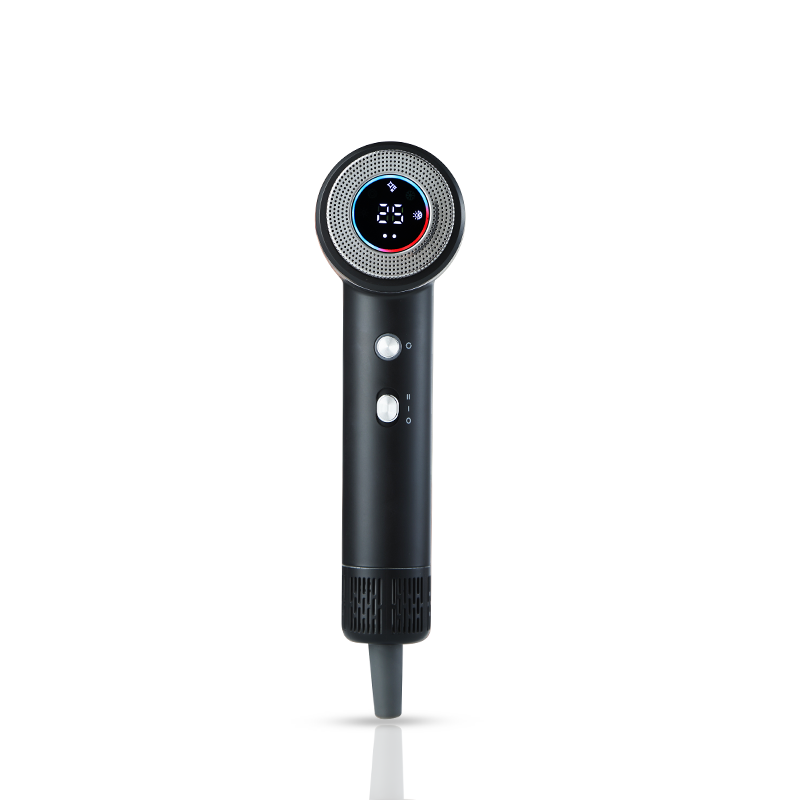 AU707A Smart LED Display BLDC High-Speed Ionic Hair DryerA salon-grade dryer with a real-time LED temperature display, billion-level ionic care, and a cool shot button—valuable for precise heat control and reducing static across various hair textures.View Product →
Portability, Dual Voltage, and Certification
If you travel across borders, dual voltage makes a hair dryer usable in different regions without a separate converter. Foldable handles and detachable air filters improve storage and maintenance. For professional buyers, certification matters even more. Common product safety marks include CE, GS, ETL, UL, and CB, while BSCI and ISO9001 indicate that the factory follows social compliance and quality management systems. These certifications are not decorative; they define whether the product can be sold in specific markets and whether the manufacturing process is controlled.
What to Look for When Sourcing Ionic Hair Dryers as a Brand or Retailer
Importers and private-label buyers often focus on price and appearance first, but the sustainability of a product line depends on the factory behind it. An ionic hair dryer requires a functioning ion generator, a stable motor, proper heat sensors, and durable internal wiring. If any of those components is not consistently assembled, the finished product can fail in the field even if it looks attractive on the showroom floor.
Why the Factory Behind the Dryer Matters
A mature factory will show evidence of product testing, in-house research and development, and documented supply chain control. Ask how the ion generator is tested, what motor type the model uses, and how temperature accuracy is verified. A manufacturer that builds multiple ionic dryers around the same BLDC platform is usually more capable of customizing color, branding, packaging, and accessories without weakening performance.
If you need a salon-grade option, look for a professional high-speed model with strong airflow, controlled heat, and a balanced handle design. This kind of product development depth is exactly what OEM and ODM buyers should expect when building a branded hair care line.
 AU770 Professional High-Speed Hair Dryer with Hair CareA flagship 1600W professional model with a balanced body and eight modes, ideal for demanding salon use thanks to its durable build and constant-temperature care with high negative ion output.View Product →
The Bottom Line
An ionic hair dryer is worth considering because it solves real daily problems: frizz, drying time, and heat stress. The best units combine a BLDC high-speed motor, reliable ion generation, flexible temperature control, and certified safety components. Whether you are buying for personal use or planning a private-label product line, the same standard applies: look for documented performance, not just the word ionic printed on the housing.
-
Can an Ionic Household Hair Dryer Truly Reduce Frizz and Static?
The quest for salon-perfect hair at home has led to a surge in advanced beauty technologies, with “I...
-
How Hot Does a Hair Dryer Get and Can You Take It on a Plane
Personal Care Appliance Guide How Does a Hair Dryer Work, and What Should Users Know Before Choosi...
-
Hair Dryer Manufacturers: How to Evaluate OEM and ODM Partners for Your Brand
If two hair dryer manufacturers quote what looks like the same product — an 1800 W dryer with negat...
-
What is the Difference Between an Ionic and Household Hair Dryer?
Introduction: Decoding the Science of Modern Hair Styling For decades, the humble household hair dry...
-
Pet Grooming Dryer Buying Guide: Power, Noise, Heat and OEM Sourcing Checks
A wet Newfoundland can hold several litres of water in its coat. When the dryer finally switches on...
-
Pet Bath Drying Machine: How to Choose Automatic Dryers for Cats and Dogs
The first area you towel-dry on a medium-sized dog is usually wet again by the time you reach the h...
- Home Products About Service News Contact
- Personal Care Products Pet Appliances
-
- Email: [email protected] Phone: +86-137 7710 9088 Add: Industrial Park of Henghe Town, Cixi City, Zhejiang Province, China
-
Contact Us Anytime for Exclusive Solutions
