

 English
 Español
 عربى

Pet Grooming Dryer Buying Guide: Power, Noise, Heat and OEM Sourcing Checks
Content
A wet Newfoundland can hold several litres of water in its coat. When the dryer finally switches on, the tool in your hand decides whether the next forty minutes run calmly or turn into a wrestling match. That is why experienced groomers usually settle a pet grooming dryer decision with measurements rather than adjectives.
The short answer comes first: three specifications decide most purchases, namely air speed at the nozzle, sound pressure at one metre, and the air temperature that actually reaches the skin. Motor type, hose diameter, filter design and price all matter, but they matter because they support or compromise those three numbers.
The Three Numbers That Decide a Pet Grooming Dryer
Air speed is not the same as airflow volume. Force dryers are rated in feet per minute (FPM) or metres per second at the nozzle; professional units commonly publish 20,000 to 60,000 FPM, while handheld models often sit between 10,000 and 25,000 FPM. A larger number is not automatically better, because a narrow nozzle concentrates the airstream on a small patch of coat and the operator ends up chasing the same spot instead of pushing water off the skin.
Noise should be measured in dB(A) at roughly one metre, at working speed rather than at idle. Dogs hear higher frequencies than people do, so a motor whine that sounds fine to a human can be genuinely alarming to an animal. A practical guide: under 70 dB(A) is comfortable for most dogs, 70 to 80 dB(A) is workable with acclimatised animals, and above 85 dB(A) many dogs will fight the hose while the operator should already be considering hearing protection.
Heat is the number most often ignored until a dog starts scratching. Heated dryers commonly quote outlet air between 30°C and 60°C, but what matters is the temperature at the skin after the air has travelled down a hose and through wet coat. Sustained air above roughly 40°C to 43°C becomes uncomfortable for many dogs, and flat-faced breeds, puppies, seniors and cats tolerate far less than a healthy adult Labrador.
When you read a specification sheet, check these items in this order:
- Air speed at the nozzle, in FPM or m/s, with the nozzle type stated
- Sound pressure in dB(A) at one metre, at the highest working speed
- Outlet temperature range, and whether heat is variable or fixed
- Motor type, rated running hours and duty cycle
- Filter location and the recommended cleaning interval
Dryer Types and Where Each One Fits
Most pet grooming dryers fall into four working categories, and they are not interchangeable. A salon that buys the wrong category usually ends up buying a second unit within a year.
| Dryer type | Air speed or volume | Noise at 1 m | Where it fits | Main risk |
|---|---|---|---|---|
| Floor or stand force dryer | 20,000-60,000 FPM | 75-90 dB(A) | Heavy double coats, busy salon wet rooms | Noise stress; surface drying while skin stays damp |
| Handheld force dryer | 10,000-25,000 FPM | 65-80 dB(A) | Faces, paws, touch-ups, mobile vans | Arm fatigue; heat build-up in small housings |
| Shoulder or neck-worn hands-free dryer | 8,000-20,000 FPM | 60-75 dB(A) | One-person grooming, animals that need holding | Airflow placement; runtime per charge |
| Drying box or cabinet | Air volume, not air speed | 50-65 dB(A) | Small breeds, cats, full-body finish drying | Temperature control, timers and supervision |
Workflow decides the category more often than coat type does. A two-person team with a floor dryer and an assistant holding the dog can finish a standard poodle quickly. A single groomer working alone, or anyone handling anxious animals that need constant physical reassurance, is usually better served by a shoulder-mounted, hands-free unit that leaves both hands on the dog.
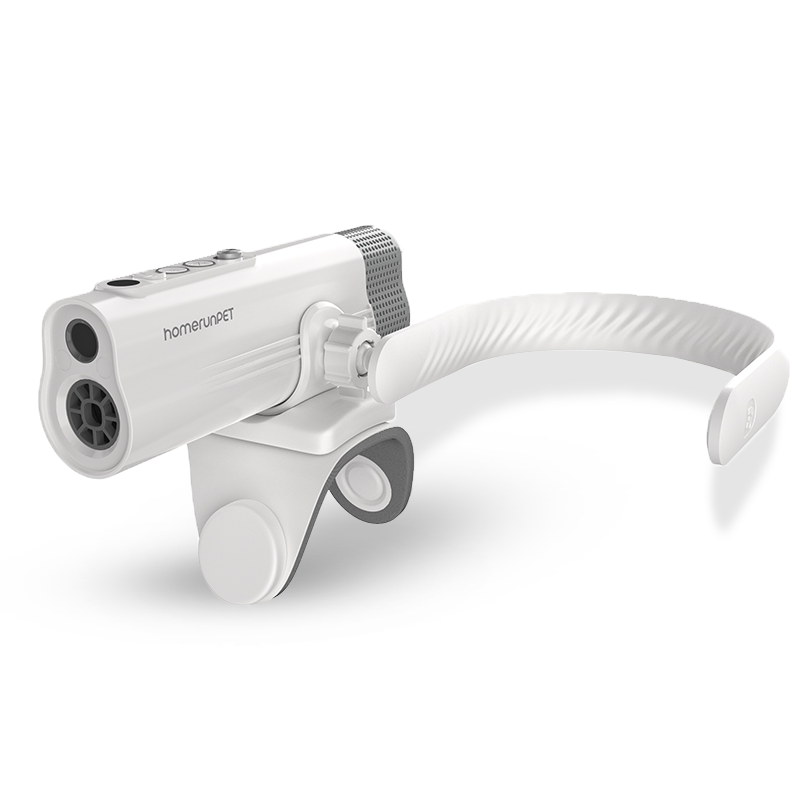
 AU712 Shoulder-Mounted Hands-Free Pet DryerFor solo groomers or anxious pets, this shoulder-supported dryer keeps both hands free for comforting and brushing during drying.View Product →
Salons that dry several dogs a day normally end up with two machines: a large force dryer to remove the bulk of the water, and a smaller handheld or hands-free unit for faces, paws and finishing. If you are building that kit from scratch, compare the full range of professional pet grooming equipment before locking into one brand, because hose diameter, nozzle sets and filter placement change how a station feels after an eight-hour day.
Matching Settings to the Dog in Front of You
The same dryer behaves differently on different coats, so one fixed setting rarely survives a real working day.
- Double coats: work in the direction of hair growth at moderate heat, and keep checking the skin, because trapped moisture near the skin is what produces hot spots and that damp-dog smell three hours later.
- Curly and doodle coats: use higher air volume at lower heat, which separates the coat instead of sealing the top layer.
- Short single coats: these dry quickly, so the risk shifts from time to over-drying and skin irritation.
- Flat-faced breeds, puppies, seniors and cats: lowest usable heat, shorter sessions, regular breaks.
- Anxious dogs: start with the dryer running at a distance and move closer only when the animal settles.
One habit worth copying from experienced hands is to keep your own hand between the nozzle and the skin, moving it as you work. If the air feels hot on your palm, it is hotter than the dog can comfortably tolerate. It is a crude gauge, but it catches temperature problems faster than any digital display.
Drying Boxes: When a Cabinet Beats a Hose
For small breeds and cats, a drying cabinet changes the economics of the appointment. The animal sits inside a controlled enclosure while the groomer cleans the next station, and the airflow arrives from several directions at once, which a single hose struggles to match.
Cabinet specifications are read differently from force dryer specifications. Air volume, temperature ceiling and ventilation cycles matter more than air speed. Look for a thermostat that holds a stated temperature rather than a simple high and low switch, a timer, a removable floor panel for cleaning, and enough air exchange that the interior does not become a warm, humid box. No cabinet should be treated as storage: the animal's head and breathing stay visible, and sessions stay short.
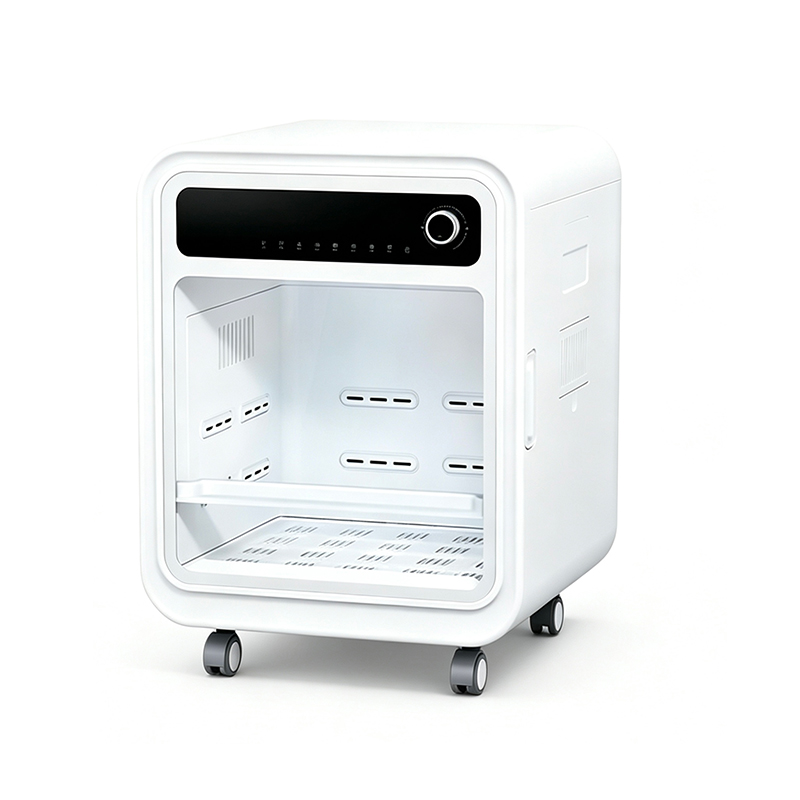 AU901 Smart Pet Drying BoxFor cabinet-style drying, this smart box offers app-controlled temperature and timer settings, multiple air speeds, sterilization, and a detachable interior for cleaning.View Product →
What Changes When You Buy for a Business
Buying one dryer and buying a thousand are different problems. At unit level you compare airflow and noise; at program level you compare certification files, voltage variants, tooling ownership and how quickly a spare part arrives when a single unit fails in a van on a Tuesday morning.
The compliance list is market-specific. CE and GS are the usual expectations in Europe, ETL or UL for North America, and CB reports simplify multi-country registration. On the factory side, ISO 9001 and BSCI are the first documents brand buyers request, because they cover quality management and social compliance rather than the product itself. Voltage is the specification that most often delays a launch: North America and Japan run on 110-120 V, most of Europe and Russia on 220-240 V, and dual-voltage designs add cost and weight but remove a whole SKU.
If your own brand goes on the product, the early conversations matter more than the late ones. Working with an established OEM and ODM personal care factory means motor, nozzle set, housing colour and retail packaging can be specified together rather than retrofitted after the first sample.
- Motor type and rated life: brushless DC motors run quieter and last longer than brushed motors.
- Tooling: who owns the moulds, and what a nozzle or housing change costs later.
- Spare parts: filters, hoses, nozzles and motors, with lead times in writing.
- Packaging: drop-test results and the artwork approval workflow.
- Commercial terms: sample lead time, production lead time, minimum order quantity and inspection process.
Checks to Run Before You Commit
These six checks catch most of the problems that only appear after delivery.
- Ask for the noise figure measured at one metre at working speed, then verify it on the sample yourself.
- Dry a wet, heavy coat for twenty minutes and feel the housing, hose and nozzle for heat build-up.
- Confirm rated voltage, plug type and cord length for every market you ship to.
- Request the certification file for the exact model, not for the product family.
- Price the consumables, including filters, hoses, nozzles and spare motors, with delivery times.
- For private label, put tooling ownership, change control and artwork approval into the contract, not into email.
A pet grooming dryer is a working tool, and the working day is unforgiving: wet coats, nervous animals, one pair of hands. Get the air speed right for the coat, keep the noise low enough that the dog stops fighting, hold the temperature below the point where skin objects, and the rest of the specification list becomes far easier to judge. Whether you are equipping a single table or specifying a container for your own brand, those three numbers are where the decision starts.
-
Pet Appliances for Grooming Brands: Dryers, Drying Boxes, and OEM Sourcing
Pet Appliances: A Sourcing Guide for Grooming and Retail Brands A grooming salon that adds pets to ...
-
Pet Bath Drying Machine: How to Choose Automatic Dryers for Cats and Dogs
The first area you towel-dry on a medium-sized dog is usually wet again by the time you reach the h...
-
Ionic Hair Dryer Buying Guide: How Negative Ions Reduce Frizz and Speed Up Drying
You stand in front of the mirror with wet, frizzy hair, a few minutes left on the clock, and a drye...
-
Negative Ion Hair Appliances: Technology, Sourcing, and Smart Buyer Checks
Ask a brand buyer what went wrong with last season's ionic dryer and the answer is rarely the ion g...
-
Hair Styling Gadgets for OEM/ODM Brands: Selection and Manufacturing Guide
When a product manager at a personal care brand sits down to review a new line of hair styling gadg...
-
Choosing the Perfect Household Hair Dryer: A Complete Buying Guide
1. Understand Your Hair Type Different hair types require different heat, speed, and technology wh...
- Home Products About Service News Contact
- Personal Care Products Pet Appliances
-
- Email: [email protected] Phone: +86-137 7710 9088 Add: Industrial Park of Henghe Town, Cixi City, Zhejiang Province, China
-
Contact Us Anytime for Exclusive Solutions
