

 English
 Español
 عربى

Pet Bath Drying Machine: How to Choose Automatic Dryers for Cats and Dogs
Content
The first area you towel-dry on a medium-sized dog is usually wet again by the time you reach the hind legs. A towel can only absorb so much water from a double coat, and most owners spend twenty minutes chasing a damp pet around the house before giving up. A pet bath drying machine changes that sequence: it moves warm air across the coat continuously and cuts the drying phase roughly in half, with less mess and less strain on your hands.
Wet fur that stays wet for hours traps moisture against the skin, encourages odor, and makes matting more likely. There is also a behavioral side: a cold, damp coat makes the pet want to shake and roll, and a loud or poorly controlled dryer can turn grooming into a fight.
This article compares the three main types of pet bath drying machines, explains the specifications that decide whether a machine is safe and effective, and helps you choose between an enclosed drying box and a hands-free dryer.
What Is a Pet Bath Drying Machine?
Conclusion first: a pet bath drying machine is any appliance designed specifically to dry a pet's coat after a bath with controlled airflow and temperature, rather than towels or a human hair dryer. The category divides into three practical types.
- Enclosed drying box: the pet stands or sits inside a ventilated cabinet while warm, filtered air circulates around the body. It requires the least effort and is the most forgiving option for cats and small-to-medium dogs.
- Hands-free shoulder-mounted dryer: the owner wears the unit on the shoulder, and body movement directs the airflow while both hands stay free for brushing and holding.
- Handheld force dryer: a high-velocity blower held in one hand. It is the standard tool in professional grooming but it is noisier and requires more experience.
| Type | How it works | Typical drying time | Best for |
|---|---|---|---|
| Enclosed drying box | Pet sits in a ventilated cabinet while warm air circulates | 20-45 minutes, mostly unattended | Cats, small-to-medium dogs, nervous pets |
| Hands-free shoulder-mounted dryer | Owner wears it; airflow follows body movement | 10-20 minutes | Medium-to-large dogs, brushing while drying |
| Handheld force dryer | High-velocity blower held by hand | 10-25 minutes | Grooming salons, experienced owners |
The right type depends on the pet's size, coat type, and tolerance for noise. There is no universal best machine; there is only the machine that matches the animal you live with.
Why the Drying Step Matters More Than the Bath
A bath cleans the hair shaft, but the health risk usually appears after the water is off. When an undercoat stays damp, moisture sits against the skin. Double-coated breeds such as huskies, golden retrievers, and samoyeds hold water in that insulating layer for hours, creating a warm, damp surface where odor-producing bacteria multiply, fur tangles, and matting forms faster.
Research on animal shaking shows that a wet dog can remove more than half of the water in its coat with a few fast shakes, but the remaining moisture is precisely the part that needs active drying. That is why towels alone are not enough and why a dryer must push air down to the skin instead of just across the top of the coat.
There is also a behavioral side. Many cats and some dogs develop fear of drying because conventional blowers are loud and aim air directly at them. A machine with a lower noise level, softer air distribution, or an enclosed chamber changes the emotional tone of the routine, which makes the drying step more likely to be completed calmly every time.
How to Evaluate a Pet Bath Drying Machine
Judge the machine in this order: airflow, temperature control, noise, safety certification, capacity, and ease of cleaning. A unit with impressive airflow but unstable heat is a burn risk, so read the specifications together rather than focusing on one number.
- Airflow: expressed in CFM (cubic feet per minute) or meters per second. An enclosed box needs enough circulation to replace humid air inside the chamber; a hands-free or handheld unit needs velocity to lift a double coat. Brushless DC (BLDC) motors are preferable because they run longer and stay cooler.
- Temperature range and stability: look for an adjustable range of roughly 25-60 degrees Celsius and a thermostatic sensor that holds the outlet temperature steady. Temperature spikes are the most common cause of burns on the belly and ear tips.
- Noise: quiet operation is usually stated in decibels. A reading around 50-65 dB is much easier for anxious pets than the 70 dB-plus output of many entry-level blowers.
- Safety certification: for the US and European markets, check for ETL/UL or CE/GS marks. They confirm that electrical insulation, overheating protection, and materials were tested by an independent laboratory.
- Capacity: a drying box must let the pet stand without crouching and keep the air vents unobstructed. Rated pet weight is only a guide; internal dimensions are the real constraint.
- Cleaning: a removable filter and smooth interior surfaces determine how quickly you can remove loose hair after each use.
If you already know how to judge a household hair dryer, you have most of the skills needed here. The same logic about airflow, heat consistency, and ion output is explained in our complete household hair dryer buying guide, and those criteria transfer directly to pet drying hardware.
| Specification | Why it matters | What to look for |
|---|---|---|
| Airflow | Determines how fast moisture leaves the coat | BLDC motor; strong circulation for boxes, velocity for handhelds |
| Temperature control | Prevents burns and keeps the pet comfortable | 25-60 degrees C adjustable; thermostatic sensor |
| Noise level | Affects pet stress during drying | Around 50-65 dB for anxious pets |
| Safety certification | Confirms independent electrical testing | ETL/UL for North America; CE/GS for Europe |
| Capacity | The machine must fit the pet | Internal dimensions, not just rated weight |
| Filter and cleaning | Reduces maintenance time | Removable filter; smooth interior surfaces |
Drying Box or Hands-Free Dryer: Which Fits Your Routine?
For a home owner with a cat or a small dog that dislikes restraint, an enclosed drying box is usually the better first machine. The pet stays inside a ventilated cabinet, air arrives from several directions, and the chamber muffles motor and fan noise. It also keeps loose hair and dander inside the cabinet instead of floating around the room.
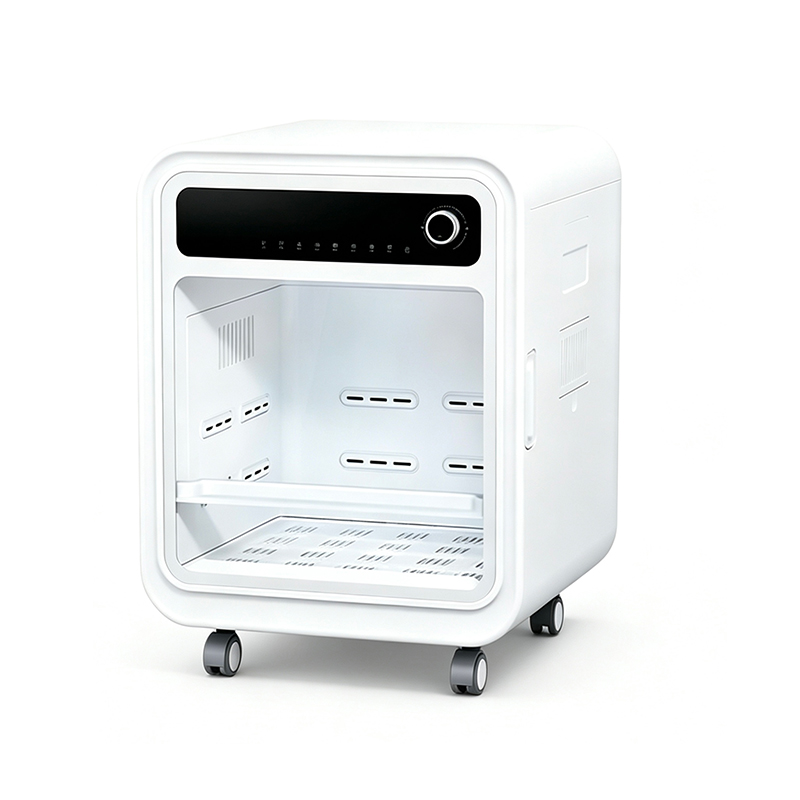 AU901 Smart Pet Drying Box with App ControlThis enclosed drying box suits cats and small dogs that dislike restraint, offering quiet, multi-directional airflow and adjustable settings via a smart app for gentle, efficient drying.View Product →
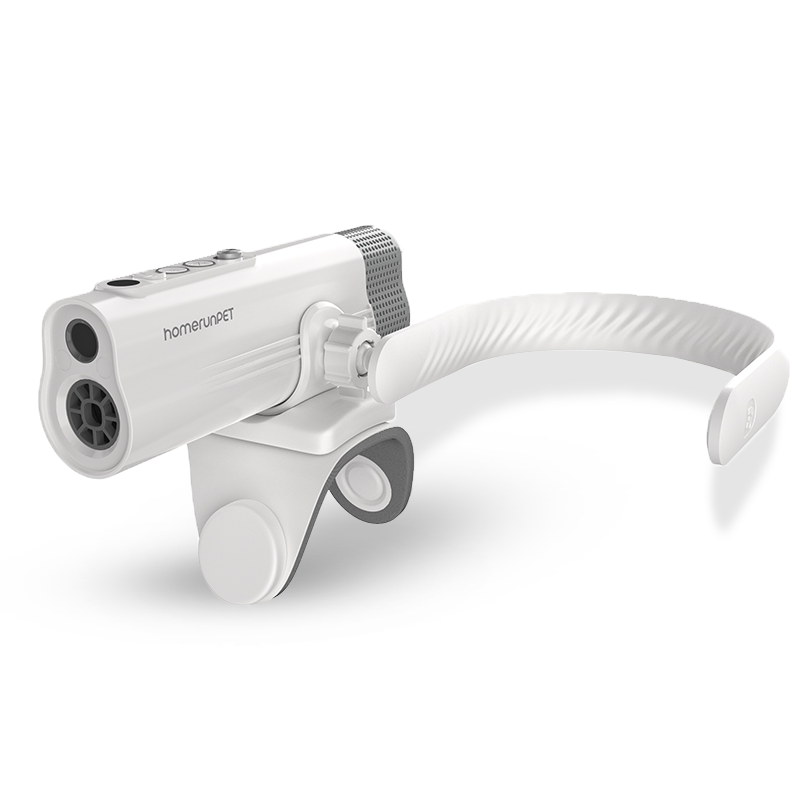
For an owner of a larger double-coated dog, a hands-free shoulder-mounted dryer offers something a box cannot: the ability to brush while drying. Brushing lifts the undercoat and removes loose hair that holds water, which is why groomers combine high-velocity airflow with a slicker brush. Wearing the dryer lets the air follow your movement instead of pinning the pet in one position.
 AU712 Shoulder-Mounted Hands-Free Pet DryerFor larger double-coated dogs, this hands-free shoulder-mounted dryer lets you brush while drying, making it easier to lift undercoat and remove water-trapping loose hair.View Product →
For a grooming salon, the practical setup is usually both types. A drying box can run unattended on cats and small dogs while a groomer uses a high-velocity dryer on larger pets at the table, which lets two animals dry at the same time.
For a single household, match the machine to the hardest drying job you regularly face. A nervous cat points to a box; a large, active dog with a thick coat points to a hands-free model with enough motor power to penetrate the undercoat.
What the Hardware Tells You About Reliability
Inside a pet bath drying machine, the components are close to those of a modern high-speed hair dryer: a brushless DC motor spins an impeller, a PTC heating element warms the air, and a thermistor sends temperature readings to a control board. Because the technology overlaps, the manufacturers behind these appliances are often the same factories that build personal-care products for international brands. That background shows up in thermal cut-offs, balanced impellers, and durable housings.
For buyers sourcing under their own brand, a factory with an ISO 9001 quality system and BSCI social-compliance audit reduces the risk of batch variation and electrical failures. For retail buyers, the visible signals are simpler: certification marks on the label, a written warranty, and a stated electrical standard. Deeply discounted machines with no listed certification usually save money in insulation, temperature sensing, or motor protection.
This is also why experience in hair dryers matters. The engineering problems in pet drying are the same ones dryer engineers have solved for years: moving enough air, keeping temperature stable, and controlling noise.
Cost Expectations and Long-Term Value
Pet bath drying machines cover a wide price range. Handheld force dryers start around $50-$150. Hands-free shoulder-mounted units typically sell for $100-$250. Enclosed drying boxes run from roughly $150 to over $600. Premium machines at the top of that range justify the price with narrower temperature control, lower noise, and better filtration; the cheapest units usually sacrifice at least one of those three.
For a medium-sized dog taken to a groomer every six weeks, professional costs are the benchmark. At $50-$90 per session, a year of grooming visits lands between $430 and $780. A home machine does not replace the groomer, but it can remove the blow-dry portion between full trims, and the savings from a few visits cover most machines within the first year.
For a grooming business, the calculation is about time. Drying is often the longest step in an appointment, and a machine that saves ten minutes per pet raises the number of appointments you can run per day. Salons therefore tend to weigh airflow velocity and durability before price.
| Option | Upfront cost | Time per drying session | Notes |
|---|---|---|---|
| Groomer blow-dry service | $0 | 30-60 minute scheduled visit | $50-$90 per visit |
| Handheld force dryer | $50-$150 | 15-25 minutes | Requires one hand; good for finishing |
| Hands-free shoulder-mounted dryer | $100-$250 | 10-20 minutes | Leaves both hands free for brushing |
| Enclosed drying box | $150-$600 | 20-45 minutes, mostly unattended | Best for cats and small-to-medium dogs |
Choose the machine based on the pet you live with, not the one with the most impressive number on the box. A nervous cat or a small dog generally does better in an enclosed drying box with stable temperature and subdued noise. A large double-coated dog dries fastest with a hands-free unit that lets you brush the undercoat while air moves through it. A salon needs both, plus a handheld dryer for finishing work.
Check airflow, confirm temperature control, read the decibel figure, and do not buy a machine without a clear safety certification. A pet bath drying machine that is quiet, safe, and easy to clean will be used every week. One that is loud or unstable will end up in a closet after the second bath.

-
Pet Appliances for Grooming Brands: Dryers, Drying Boxes, and OEM Sourcing
Pet Appliances: A Sourcing Guide for Grooming and Retail Brands A grooming salon that adds pets to ...
-
Hair Dryer Manufacturers: How to Evaluate OEM and ODM Partners for Your Brand
If two hair dryer manufacturers quote what looks like the same product — an 1800 W dryer with negat...
-
How Do You Use a Curling Wand for Perfect, Long-Lasting Curls
Professional Hair Styling Guide How Do You Use a Curling Wand for Controlled, Long-Lasting Curls?...
-
How Hot Does a Hair Dryer Get and Can You Take It on a Plane
Personal Care Appliance Guide How Does a Hair Dryer Work, and What Should Users Know Before Choosi...
-
Household Hair Care Tools Factory: How to Choose the Right OEM & ODM Partner
Two batches of the same hair dryer design. One earns a 4.6-star rating and clean reorder cycles. Th...
-
Ionic Hair Dryer Buying Guide: How Negative Ions Reduce Frizz and Speed Up Drying
You stand in front of the mirror with wet, frizzy hair, a few minutes left on the clock, and a drye...
- Home Products About Service News Contact
- Personal Care Products Pet Appliances
-
- Email: [email protected] Phone: +86-137 7710 9088 Add: Industrial Park of Henghe Town, Cixi City, Zhejiang Province, China
-
Contact Us Anytime for Exclusive Solutions
