

 English
 Español
 عربى
عربى
Hair Dryer Manufacturers: How to Evaluate OEM and ODM Partners for Your Brand
Content
- 1 OEM or ODM? Match the Cooperation Model to Your Business
- 2 BLDC vs DC Motors: The Technical Fork That Shapes Your Product
- 3 Certifications: The Paperwork That Decides Where You Can Sell
- 4 How to Vet a Hair Dryer Factory Before You Sign
- 5 Why a Broader Appliance Portfolio Is a Sourcing Advantage
- 6 A Five-Step Sourcing Roadmap
If two hair dryer manufacturers quote what looks like the same product — an 1800 W dryer with negative ion output — and one price sits 30 percent below the other, the cheaper quote usually wins the purchase order. It also explains a familiar pattern of problems months later: overheating switches, ion generators that fail after a few weeks, and packaging that cannot survive a drop test. Choosing a manufacturer is not primarily a price decision; it is a risk decision.
Here is the conclusion up front: the right manufacturing partner for your hair dryer line is the one whose cooperation model, motor platform, and certification portfolio line up with your target market and price tier — and all three can be verified before you pay a deposit. The sections below explain how to check each one, where the trade-offs sit, and which mistakes cost buyers the most.
OEM or ODM? Match the Cooperation Model to Your Business
Most hair dryer manufacturers work in two cooperation modes, and confusing them is the first common sourcing mistake.
OEM: You Own the Design
Under an OEM arrangement, you bring finished designs and specifications and the factory builds to them. You control the appearance, packaging, and feature list. The trade-offs are a longer development cycle and tooling costs for private molds, which for a full program typically run well into five figures.
ODM: You Borrow the Platform
Under an ODM arrangement, the factory already owns product platforms, molds, and engineering data. You select a base model, adjust colors, accessories, and branding, and reach the market in a fraction of the time. Unit costs are usually lower because tooling is shared, but similar products may exist under other brands.
Experienced buyers often combine both: launch on an ODM platform to test demand, then move to a customized OEM build once volumes justify dedicated molds. When shortlisting suppliers, ask directly which catalog products are open platforms and which belong to specific customers — the answer changes your pricing, your lead time, and your legal exposure.
BLDC vs DC Motors: The Technical Fork That Shapes Your Product
Inside the factory, the biggest technical fork is the motor. A hair dryer is essentially a heater plus a fan, and the motor driving that fan determines weight, noise, drying speed, and which smart features the platform can carry.
DC (brushed motor) models are the traditional platform. The technology is mature, the supply chain is deep, and unit costs are low, so DC dryers still dominate entry and mid-market shelves. They are heavier and louder, and brush wear limits motor life.
BLDC (brushless DC) high-speed models spin far faster — typically above 100,000 RPM — and deliver a concentrated, high-velocity airflow that dries hair quickly at moderate temperatures. Less heat means less stress on the hair cuticle, and the control board required to drive a BLDC motor also supports what retail buyers now expect: intelligent temperature control, LED displays, memory modes, and ion management. The trade-offs are a higher unit cost and the need for a factory that is genuinely competent in motor-drive electronics rather than simple assembly.
| Dimension | BLDC High-Speed Platform | DC Motor Platform |
|---|---|---|
| Motor speed | Typically above 100,000 RPM | Roughly 15,000–20,000 RPM |
| Drying approach | High-velocity airflow at moderate heat | Slower airflow at higher heat |
| Weight and noise | Lighter and quieter | Heavier and louder |
| Smart features | Supports LED displays, memory modes, and temperature control | Limited by simpler electronics |
| Unit cost | Higher | Lower |
| Best fit | Mid-range to premium retail tiers | Entry and value tiers |
A capable BLDC supplier will show you more than spec sheets. A model like the
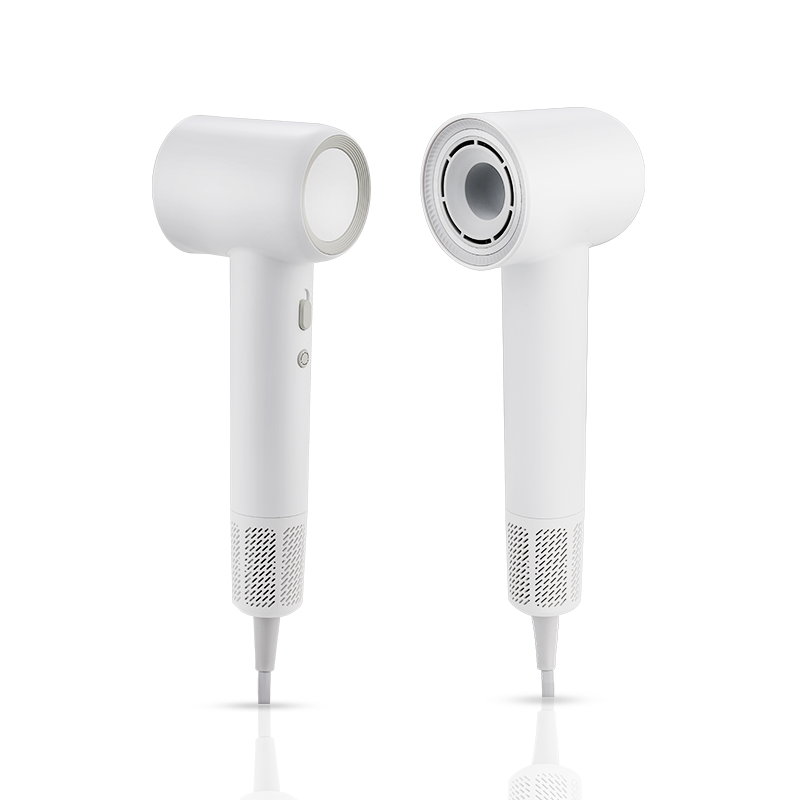
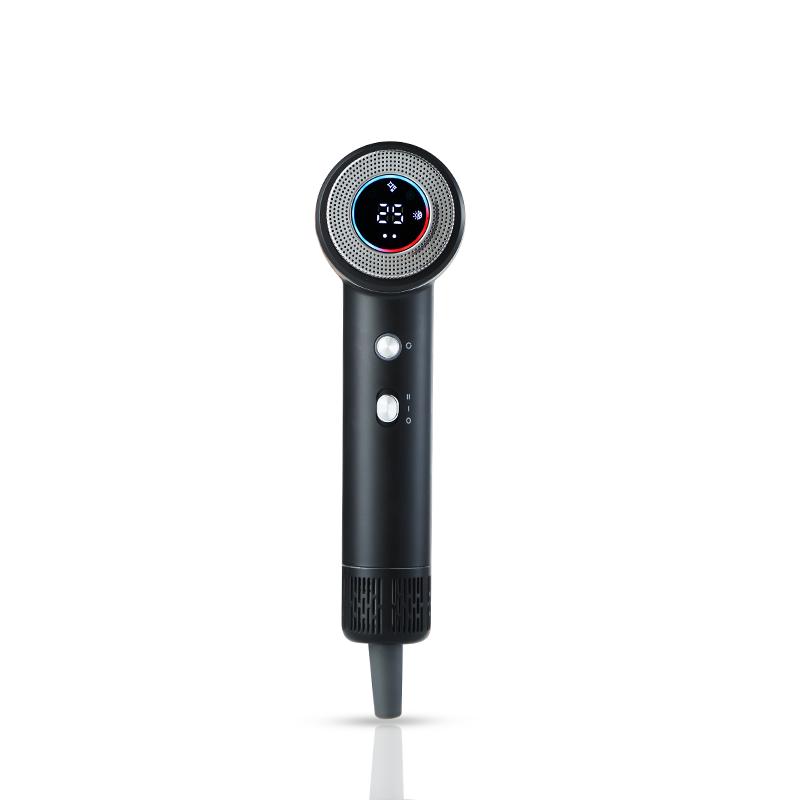 AU707A Smart LED Display High-Speed Ionic Hair DryerA 1600W BLDC salon dryer with a rear-cover LED temperature display, billion-level ion output, 4 heat and 2 speed settings, and a cool shot button. Its integrated display and ion control show the factory's ability to build complete BLDC systems, not just assembled modules.View Product →
, which pairs the high-speed motor with an LED display and intelligent ion control, demonstrates whether the factory can integrate displays, sensors, and firmware — the skills that separate a true BLDC developer from an assembler fitting bought-in modules together.
Certifications: The Paperwork That Decides Where You Can Sell
However good the hardware is, uncertified stock is dead stock. Customs authorities and retail chains in your target markets ask for specific documents, and established hair dryer manufacturers hold them before you ask:
- CE — the mandatory conformity marking for the European Union.
- GS — an independently tested safety mark that many European retailers prefer to see.
- ETL and UL — recognized electrical safety marks for the United States and Canada.
- CB Scheme reports — IEC-based test reports that accelerate national certifications across multiple markets.
- ISO 9001 — evidence that the factory runs a managed quality system.
- BSCI — social-compliance auditing that large retail chains increasingly require before onboarding a supplier.
| Certification | Scope | Why It Matters to Buyers |
|---|---|---|
| CE | European Union | Mandatory safety conformity marking for EU market access |
| GS | Germany and wider EU | Independently tested safety mark preferred by many EU retailers |
| ETL / UL | United States and Canada | Recognized electrical safety marks for North American retail |
| CB Scheme | Multiple international markets | IEC-based reports that speed up national certifications |
| ISO 9001 | Factory quality system | Evidence of a managed, audited quality process |
| BSCI | Social compliance | Common prerequisite for large retail chain onboarding |
The procurement risk here is subtle: some suppliers present a certificate for one configuration and ship another. Confirm the certificate number, check that the rated power and photos match the sample you approved, and write certification-maintenance duties into the supply agreement.
How to Vet a Hair Dryer Factory Before You Sign
Certificates show what a factory once passed; vetting shows what it does every day. Before signing, work through this checklist:
- Engineering depth: ask how many engineers work on motor drive, heating control, and firmware. Factories that design their own platforms answer change requests in weeks; assemblers must route every question to an outside module supplier.
- In-house testing: a serious manufacturer runs motor life tests, temperature calibration, and high-voltage safety tests on site. Ask to walk the lab during an audit, or on a live video call.
- Capacity and tooling: confirm annual output, the number of assembly lines, and whether molds are maintained in-house. This determines whether your peak-season order survives the third-quarter rush.
- Sample consistency: evaluate five samples, not one. Weigh them, measure noise, airflow, and outlet temperature, then compare. A factory that cannot build five identical units will not build five thousand.
- Segment flexibility: look for platforms adapted to different user groups rather than one recipe sold to everyone.
That last point matters more than it sounds. A BLDC platform extended into a dedicated baby-care mode, as in this
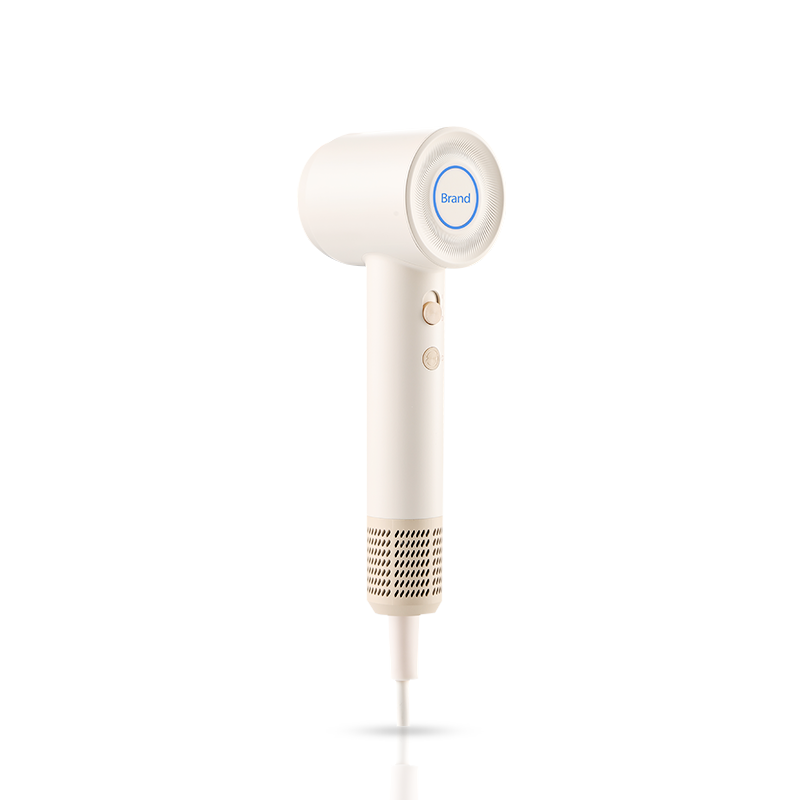 AU709C High-Speed BLDC Hair Dryer with Baby Care ModeBuilt around a 110,000 RPM brushless motor and lightweight 395g body, this dryer adds a gentle, low-noise Baby Mode for sensitive scalps. It demonstrates how the same BLDC platform can be retuned for temperature and airflow to meet different market needs.View Product →
, shows the factory can retune temperature and airflow logic for sensitive users — the same engineering flexibility you will need when your own market demands a variation.
Why a Broader Appliance Portfolio Is a Sourcing Advantage
There is also a structural argument for choosing a manufacturer with a wider appliance portfolio. Suppliers who build only dryers force you to run a separate vendor for every category; a factory whose platforms cover air stylers, curling wands, shavers, and pet grooming appliances lets you consolidate a personal care line under one quality system, one audit, and one negotiation.
The technology transfers, too. The motor, heating, and thermal safety engineering carried from hair dryers into this
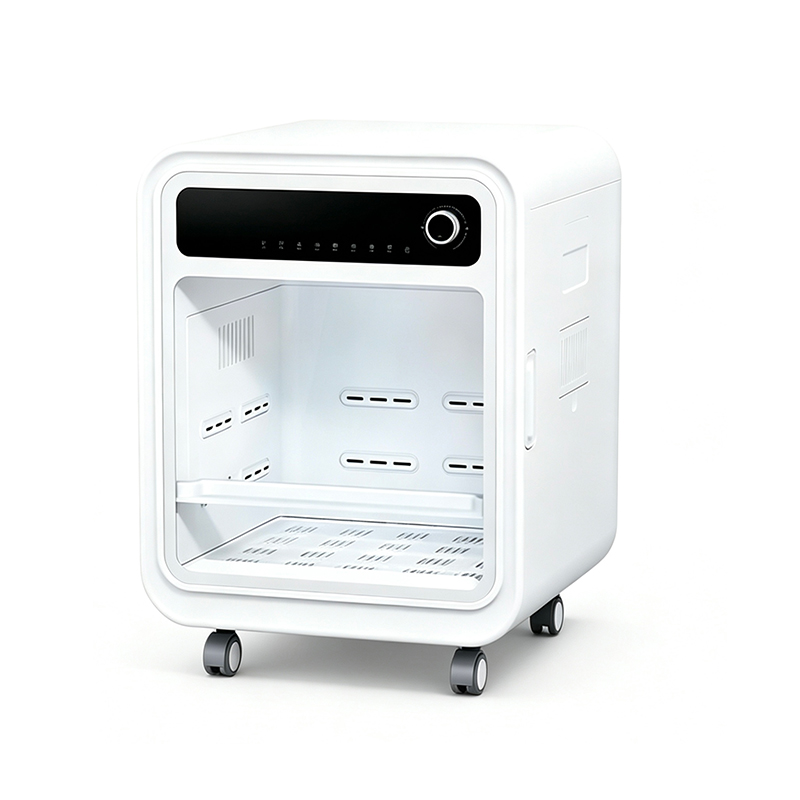 AU901 Smart Pet Drying BoxA 220V smart drying box with APP control over modes, temperature, and timer, plus low-noise circulation, sterilization, and a washable filter. It shows the factory's motor and thermal safety expertise transferring from hair dryers into pet grooming products.View Product →
is the same discipline that keeps a household dryer within safe temperature limits. When your dryers sell and retail buyers ask what comes next, a partner who already manufactures stylers and grooming tools shortens that conversation from months to weeks.
A Five-Step Sourcing Roadmap
To turn these checks into a process, most experienced buyers follow five steps:
- Define the specification in writing: motor type, power, weight, feature list, and the certifications your market requires.
- Shortlist manufacturers on evidence — verified certificates, owned molds, named engineers — not catalog photography.
- Request samples from at least three factories and test them side by side against the written specification.
- Audit the factory on site or by video, focusing on the laboratory, the motor line, and QC checkpoints.
- Negotiate quality terms into the contract: certification maintenance, consistency tolerances, and remedies for failed inspections.
The product-side logic behind step one — how heat levels, ion output, and attachments affect drying results — is covered in more detail in this household hair dryer buying guide.
The best hair dryer manufacturer for your brand is ultimately the one that treats your specification as a shared engineering problem: a factory with its own R&D team, its own laboratory, and a track record of OEM and ODM programs for markets such as the United States, Japan, and Europe. Verify those fundamentals first and price becomes a conversation instead of a gamble. As an appliance manufacturer with roots dating back to 1996, Prima Electric publishes its certifications, factory details, and full product range — a useful benchmark for what transparency should look like when you evaluate any supplier.
-
Hair Styling Gadgets for OEM/ODM Brands: Selection and Manufacturing Guide
When a product manager at a personal care brand sits down to review a new line of hair styling gadg...
-
Hair Styling Appliances Manufacturers: A Sourcing Guide for Brands
It takes only one defective shipment to erase a year of brand building. For companies importing hai...
-
How Hot Does a Hair Dryer Get and Can You Take It on a Plane
Personal Care Appliance Guide How Does a Hair Dryer Work, and What Should Users Know Before Choosi...
-
Household Hair Care Tools Factory: How to Choose the Right OEM & ODM Partner
Two batches of the same hair dryer design. One earns a 4.6-star rating and clean reorder cycles. Th...
-
How Do You Use a Curling Wand for Perfect, Long-Lasting Curls
Professional Hair Styling Guide How Do You Use a Curling Wand for Controlled, Long-Lasting Curls?...
-
What is the Difference Between an Ionic and Household Hair Dryer?
Introduction: Decoding the Science of Modern Hair Styling For decades, the humble household hair dry...
- Home Products About Service News Contact
- Personal Care Products Pet Appliances
-
- Email: [email protected] Phone: +86-137 7710 9088 Add: Industrial Park of Henghe Town, Cixi City, Zhejiang Province, China
-
Contact Us Anytime for Exclusive Solutions
