

 English
 Español
 عربى

Custom Hair Styling Gadgets Suppliers: Practical Applications, Selection, Performance
Content
- 1 Decide the Platform Before You Compare Prices
- 2 A Spec Comparison That Survives a Sample Review
- 3 Where the Customization Budget Really Goes
- 4 Certifications and Voltage: The Quiet Deal-Breakers
- 5 Matching the Tool Mix to Your Channel
- 6 A Sourcing Sequence That Reduces Rework
- 7 Questions Worth Asking on the First Call
A brand team recently sent the same hair styler brief to six factories. The quotes landed within 8% of one another on price, yet the samples differed by nearly 40 grams in weight, 6 dB(A) in noise, and almost two minutes of drying time on shoulder-length hair. Price told them very little. The specification behind the price told them everything.
The short version: when you shortlist custom hair styling gadgets suppliers, judge them on three things first, the motor platform they build around, the certification set they can produce without a chase, and how wide a styling range they can cover under one quality system. Unit price, tooling cost and lead time all follow from those three decisions rather than leading them.
Decide the Platform Before You Compare Prices
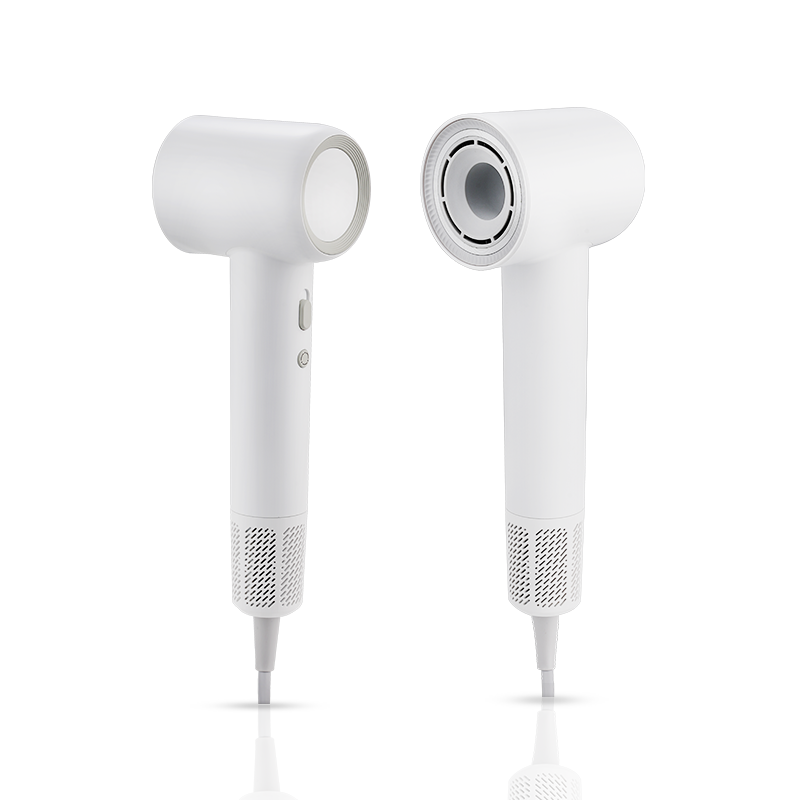
Almost every hair styling gadget on the market starts from one of two platforms. A DC brushed motor dryer is cheap to tool, familiar to assemble and easy to scale, which is why value retailers still buy it by the container. A BLDC high-speed dryer runs a brushless motor at roughly 90,000 to 120,000 rpm, which shifts the whole design: lighter body, smaller heating element, a microcontroller with temperature sensing, and usually a negative ion generator as standard rather than an add-on.
The practical consequence is that a factory tooled for DC dryers cannot simply quote you a high-speed unit at a small premium. You are asking for a different chassis, a different electronics stack, different reliability testing and often a different certification file. Treat that as a redesign, because that is what it is. Suppliers who build both platforms will usually be candid about which one fits your price band and which one is wasted effort for your channel.
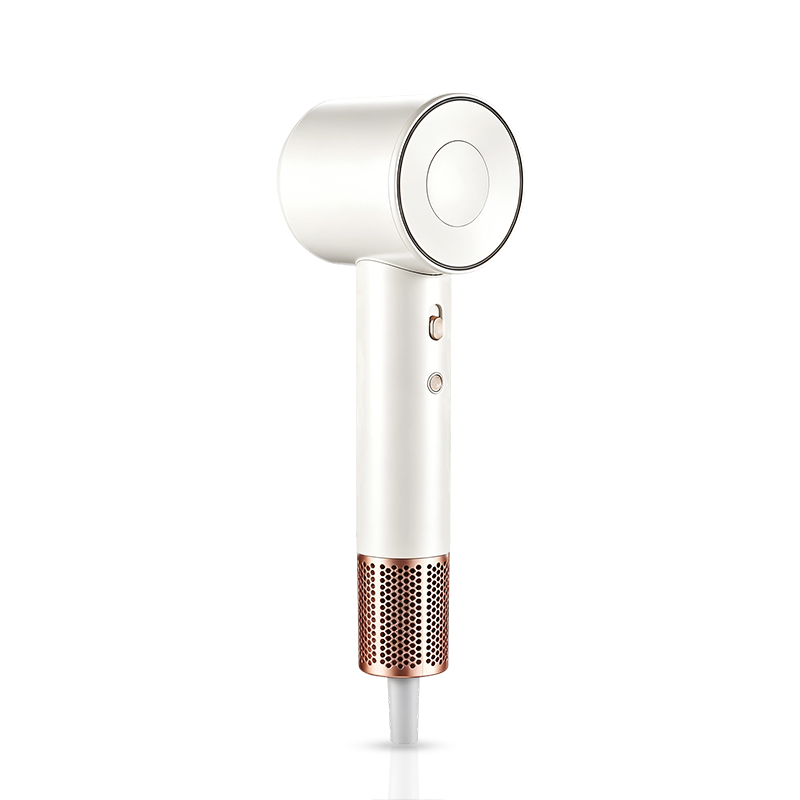
A professional-grade example makes the difference concrete. The brushless unit behind this professional salon styling tools range carries a balanced motor, layered heat settings and a cool-shot function because salon users judge a dryer on sustained airflow, not peak wattage.
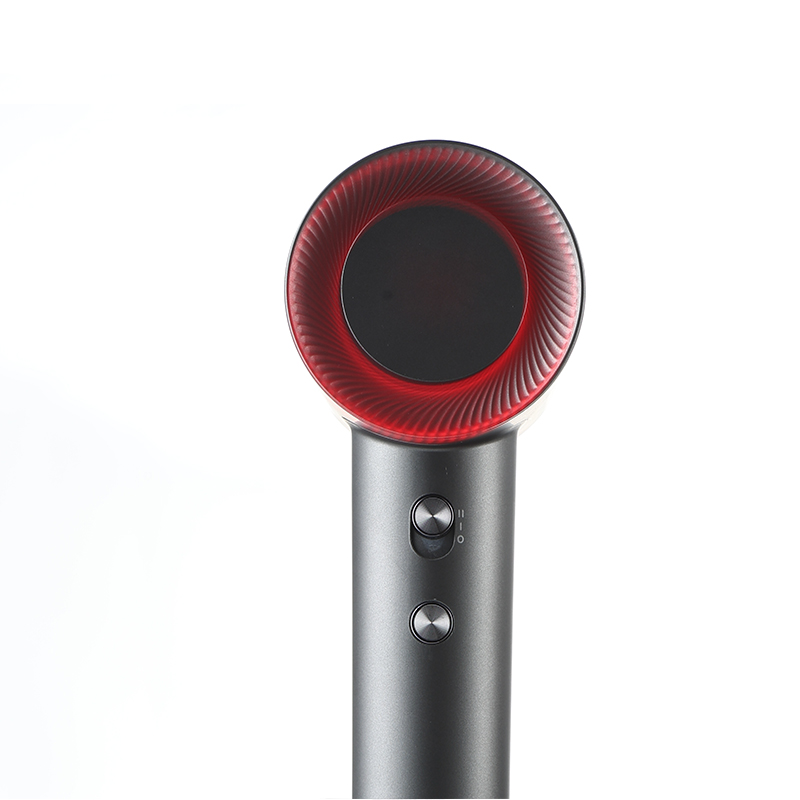 AU770 Professional High-Speed Brushless Hair DryerFlagship salon dryer with high-speed brushless motor, eight working modes and negative-ion care, offering a concrete professional-grade specification for comparison.View Product →
A Spec Comparison That Survives a Sample Review
Put these two columns side by side at the quotation stage. If a supplier cannot fill in a row with a measured value rather than a marketing phrase, that row is where your first sampling round will stall.
| Parameter | DC brushed dryer | BLDC high-speed dryer |
|---|---|---|
| Motor speed | 12,000-20,000 rpm | 90,000-120,000 rpm |
| Rated power | 1600-2000 W | 1200-1600 W |
| Dry time, shoulder-length hair | 6-7 minutes | 3-4 minutes |
| Typical unit weight | 480-560 g | 350-430 g |
| Noise at 1 m | 78-84 dB(A) | 68-76 dB(A) |
| Heat control | Bimetal thermostat | MCU with NTC sensing |
| Ionic feature | Optional | Usually standard |
| Best fit | Volume retail, travel | Premium retail, salon, gifting |
Where the Customization Budget Really Goes
Buyers new to the category often assume customization is mostly a packaging exercise. In practice, tooling and housings dominate the first order, and the electronics follow close behind. That matters because those two lines are exactly where a supplier's engineering depth shows up, and where an inexperienced partner will quietly under-quote to win the order and recover costs later through engineering change notes.
Two clauses protect you here. First, confirm who owns the moulds and where they physically sit, because a tool built for another client's project rarely transfers cleanly. Second, agree colour and finish MOQs separately from unit MOQs. A four-colour lineup on a 3,000-piece order can double your effective tooling burden if the factory only amortises one colour split.
Certifications and Voltage: The Quiet Deal-Breakers
Compliance is the least interesting part of the conversation and the most expensive to get wrong. For Europe you need CE plus GS if German retail is in scope; for North America, ETL or UL; for international listings, CB reports shorten the work in every market that recognises them. Ask for a certificate file with the exact model numbers on it, not a generic factory certificate, and check the date of issue.
Voltage is the second trap. A 1800 W heater at 230 V and the same heater at 120 V do not behave identically, and a dryer rated for one market cannot simply be re-plugged for the other. If your range includes travel retail, specify dual voltage at the brief stage rather than after the housing is cut. Compact formats such as this foldable dual-voltage model exist precisely because that decision is cheaper to make early.
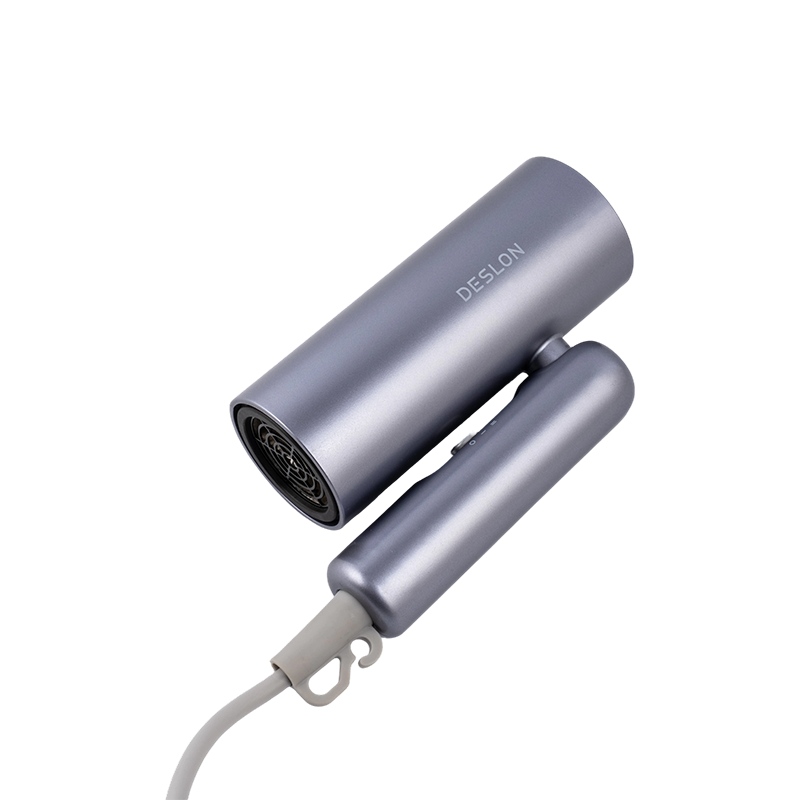 AU703 Compact Dual-Voltage Foldable Travel Hair DryerPortable 110V/240V dryer with foldable body, 800W/1000W options and two heat and speed settings, suited to travel retail and export ranges.View Product →
On the factory side, ISO 9001 and BSCI documentation tells you whether the quality system and social compliance paperwork are maintained continuously or assembled for audits. Ask how nonconforming units are handled and ask to see the last internal quality report.
Matching the Tool Mix to Your Channel
Styling gadgets sell as a family, not as isolated SKUs. A salon-focused brand needs sustained airflow, a long cord, magnetic nozzle fittings and a cool shot. A gifting programme wants multi-head stylers where one handle serves as dryer, brush and curler, because shelf appeal and unboxing carry more weight than raw performance. A travel range needs compact geometry and low weight, and cordless automatic curlers solve a genuine pain point for users who cannot manage a plug and a mirror at the same time.
Each of those lanes implies a different reliability test plan. Cordless tools live or die on battery cycle life and charging port durability, so ask for cycle counts rather than a claim of long runtime. Corded dryers live or die on cord flex life and thermal cut-out reliability.
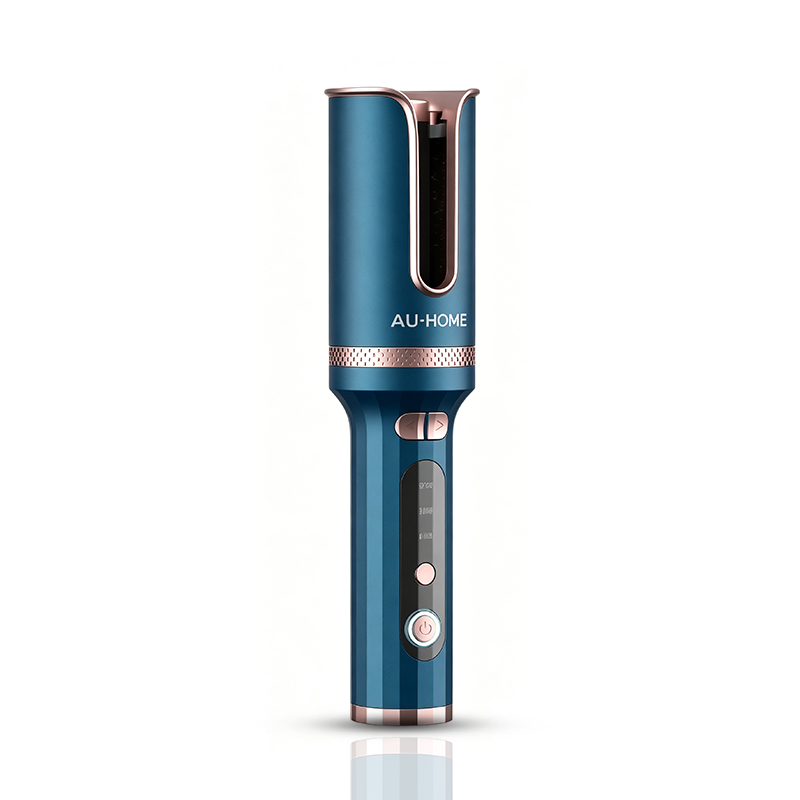
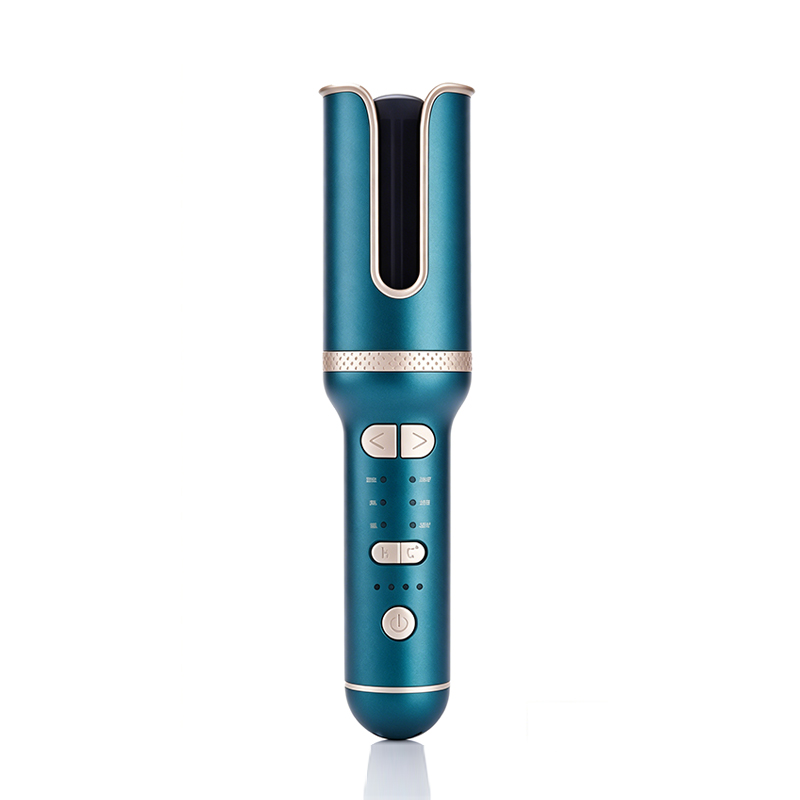 501 Cordless Automatic Hair Curler with USB-C ChargingCordless 4800mAh curler with three temperature and timer settings plus automatic shutoff, useful for battery-powered styling ranges.View Product →
Pet grooming is worth a second look if you already sell personal care. The airflow and drying technology overlaps heavily, and a supplier with both lines can support a category extension without a new sourcing relationship.
A Sourcing Sequence That Reduces Rework
- Write a brief that states platform, target retail price, target markets and certification set before you request any quotation.
- Shortlist two or three suppliers who already build that platform, not suppliers who promise to learn it.
- Request a compliance matrix per target market, listing certificate type, model coverage and validity.
- Ask for tooling cost, MOQ per colour, sample lead time and production lead time in one document so the numbers can be compared.
- Approve a pre-production sample only after drop, cord flex, thermal cut-out and hipot tests are reported.
- Run a pilot batch and validate packaging, manual language versions and retail carton marking before the full order.
A supplier with a genuine engineering team will engage at step one. A trading intermediary will usually engage at step four, once a price is on the table.
Questions Worth Asking on the First Call
- Which motor platform do you manufacture in-house, and which do you subcontract?
- Can you show a certificate file covering the exact model I am buying?
- Who owns the tooling, and what happens to it if the programme ends?
- What is your measured noise figure at one metre on the proposed configuration?
- How do you handle engineering changes after the sample is approved, and who absorbs the cost?
- What share of your output ships to the markets I am targeting?
None of these questions is difficult. What separates strong suppliers from weak ones is whether the answers arrive with numbers, documents and dates attached. A factory that has run personal care programmes since the 1990s and holds CE, GS, ETL, UL and CB files alongside ISO 9001 and BSCI certification will answer quickly, because the evidence already exists in its system. If you want to see what that looks like in practice, review the capability profile of an OEM/ODM personal care factory before you send out the brief, and compare its platform range and tooling setup against your own roadmap. The right partner is the one whose existing line already looks like your next product, not the one offering the lowest first quote.
-
Hair Styling Gadgets for OEM/ODM Brands: Selection and Manufacturing Guide
When a product manager at a personal care brand sits down to review a new line of hair styling gadg...
-
Hair Styling Gadgets: Key Types, Technologies, and Buying Considerations
Choosing a hair styling gadget depends less on brand names than on three engineering decisions: wha...
-
Hair Styling Appliances Manufacturers: A Sourcing Guide for Brands
It takes only one defective shipment to erase a year of brand building. For companies importing hai...
-
Hair Styling Appliances: Types, Technology, and Choosing a Manufacturing Partner
When you pick up a hair styling appliance, the most important information is often printed in small...
-
Hair Dryer Manufacturers: How to Evaluate OEM and ODM Partners for Your Brand
If two hair dryer manufacturers quote what looks like the same product — an 1800 W dryer with negat...
-
Hair Care Products Manufacturers: How to Choose a Reliable OEM/ODM Factory
You ask two hair care products manufacturers for a quote on a high-speed hair dryer. One comes back...
- Home Products About Service News Contact
- Personal Care Products Pet Appliances
-
- Email: [email protected] Phone: +86-137 7710 9088 Add: Industrial Park of Henghe Town, Cixi City, Zhejiang Province, China
-
Contact Us Anytime for Exclusive Solutions
